The Flag of Norway mother of flags

Here’s what you need to know about the flag that lately has been called “the mother of all flags”.

A country’s flag represents its religion, the number of the states, values and beliefs. Norway’s flag is a bit more complicated than that.

Norway’s flag is one of the oldest in the world, designed in 1821 by MP Fredrik Meltzer. However, its design it is not unique since all of Scandinavia (except Greenland) uses the iconic Nordic Cross. Its colours are red, white and blue (a colour combination in the flags of the United States, United Kingdom and France to name only three).

The flag of Norway has changed a lot during the year until it reached its final aspect as we know today. The first version was a red flag with a crowned, golden lion holding a silver axe.
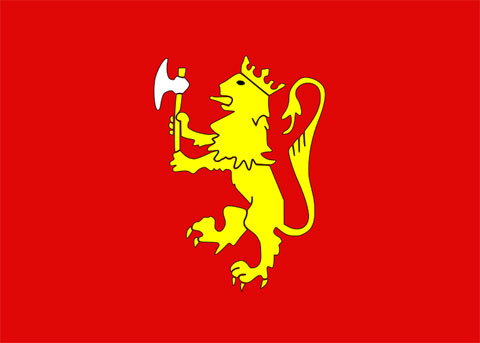
The lion was the symbol for monarchy and the axe was a commemoration of the axe that killed St. Olaf in the Battle of Stiklestad, connecting “Norway’s Eternal King” to the Norwegian government. Apparently, the current flag was born from a mistake when Meltzer’s son accidentally drew something blue while he was drawing the Danish flag. Truth or legends?

We’ve just seen how the Norwegian flag contains the Danish flag while paying tribute to the Swedish flag, but why is it called “mother of all flags”?

Some very sharp-eyed people found out that if you isolate certain parts of the Norwegian flag, you can find seven other flags from different countries.

These are the Flags of Indonesia, Poland, Malta GC, Finland, France, Netherlands and Thailand. Also bear in mind that Monaco’s flag is almost identical to Indonesia’s.

However, we must always remember that each flag has its own history, beliefs and colours!!

11 REASONS STUDYING ABROAD IS WORTH IT

  1. Travel

First thing’s first! Why did I initially decide to study abroad? To travel!

Studying abroad is giving me the opportunity to see new places without leaving the school and compromising my education.

  • Learn a new language

Making jokes and sharing secrets with friend is the best way to learn a new language

Sitting in a classroom and listening to the teacher is not enough to bring your second language to life. A total immersion in a new country and new language is the best way to become fluent!

  • Lifelong friends

Nothing helps you to have a personal view of different cultures around the world than adding more variety to your group of friends!

I met new friends from all over the world and I became incredibly close with some of them. Studying with them, going out with them, living with them and sharing amazing experiences with them. Be sure to keep in touch after you leave!

  • Self-discovery

Studying abroad will help you to find yourself.

 Leaving your family and your friends means you have to count on yourself more than ever before. Exploring new cultures, you will see a new part of yourself that you didn’t know you had.

  • New interests

You will never know until you try!

When you study abroad you try so many new things and you find out what you really like. I’m trying a lot of things that I could have never imagined.

  • Independence

You get to be totally independent

You are in a new country and, at the beginning, no one knows who you are. The staff is always available to help you, but you are more or less on your own. Feel that? It’s called independence! Embrace that freedom!

  • Overcome your comfort zone

You will get to put yourself out there and take risks

You might get homesick and feel ready to run home to your family, but you won’t. You will overcome everything, even if, at first, seems so overwhelming and impossible to face.

  • You will see your own culture in a new light

Learn to appreciate what makes your country unique

After you see another way of living, you will see a new perspective on your own home and get a view of what is really going on around you.

  • Different education system

Each country has its own approach to education

The classes you can take abroad could be way so different from what you are used to. Be sure to take advantages and resources during your stay to share the new things with the school in your own country.

  • Job opportunities

A year abroad looks great on a resume

Studying abroad says a lot about you on your resume. Not only it highlights the knowledge of a second language, but also your ability to adapt to a new environment. Studying abroad shows courage and an openness to different ideas. You are promising to bring new perspectives to the company or workplace.

  • It’ll be unforgettable

Study abroad will give you enough stories to last a lifetime

Make sure to safe some mementos, like train and plane tickets and photographs. Keep a record of your adventures, because you might not realize how incredible your year or semester was until you’re home.

INTERESTING FACTS ABOUT NORWAY

  • Norway introduced salmon sushi to the Japanese
  • Dying is illegal in Longyearbyen, Norway because the town’s small graveyard stopped accepting bodies after discovering the permafrost prevented the bodies from decomposing.
Archipelago of Lofoten
  • The archipelago of Lofoten in Norway is north of the Arctic Circle. Yet because of the largest positive temperature anomaly in the world relative to latitude, it is teeming with life and has the largest deep water coral reef in the word.
  • In 2008, Norway knighted a penguin.
  • In 1251, Henry III of England was given a polar bear by the King of Norway. He kept it in the Tower of London, on a long chain so that it could swim in the Thames.
  • In 2011, Norway went through a nationwide butter shortage, where smugglers would often get caught smuggling butter and online auctions for one packet of butter reached as high as $77 (67,78 euro; 661,26 kr).
  • IKEA names sofas, coffee tables, bookshelves, media storage and doorknobs after places in Sweden; beds, wardrobes and hall furniture after places in Norway; carpets after places in Denmark and dining tables and chairs after places in Finland. Each of us has asked himself at least once in his life if the names of the IKEA’s furniture mean something and what. SECRET’S OUT!
  • Alcoholic beverages that are stronger than 4.75% (mainly cider and beer) are sold only in specialized government owned shops called Vinmonopolet (which literally translates to Wine Monopoly in English). Each city has a few such shops and there are no Vinmonopolets in the Norwegian countryside.
  • Do you know those crazy Instagram photos you’ve seen with someone balancing on the edge of a cliff jutting out from a mountainside? They’re likely taken at Norway’s Trolltunga (or Troll’s Tongue in English), which is 2,300 feet (700 metres) above the north side of lake Ringedalsvatne.
Trolltunga
  • One of Freia’s most famous Norwegian factories that makes hot chocolate, inspired Roald Dahl to write his famous book, Charlie and the Chocolate Factory.
Freia’s factories
  • Coffee came to Norway about 280 years ago, but it wasn’t generally accepted until the 1870s. Today, Norwegians are among the world’s biggest consumers of coffee per inhabitant.

Why did I choose Norway?


Os (Bergen)
Bryggen (Bergen)

“Norway??”, “what are you going to do there?”, “will you be living with Santa Claus’ reindeer?”

Well, if you know me don’t ask me these questions ever again. What do you mean what I’m going to do there? Norway is the land of the sun that never sets and at the same time the perfect place to see the most beautiful phenomenon of nature: The Northern Lights. The nature is the most overwhelming force and man is powerless in front of it. He can’t change the course of the “sea arms” called fjords, he cannot melt glaciers and snow.

Os (Bergen)

People respect their each other, women are independent, emancipated and strong, crime and violence doesn’t exist. People love the strangers and are open and curious in front of a language that isn’t theirs or a slightly darker skin. They love traveling and discovering new places. Before I chose the country that would host me for 10 months, I learnt a lot about the culture and I saw photos that left me completely breathless. I’ve been thinking and decided to write my stories and experiences here and to take you on my journey. And to help the future exchange students and the Italian fellows, who for “carbonara and pizza” don’t have the bravery to leave Italy but are still curious to know how things go here in Norway.